
The question every healthcare leader should ask after reading this book
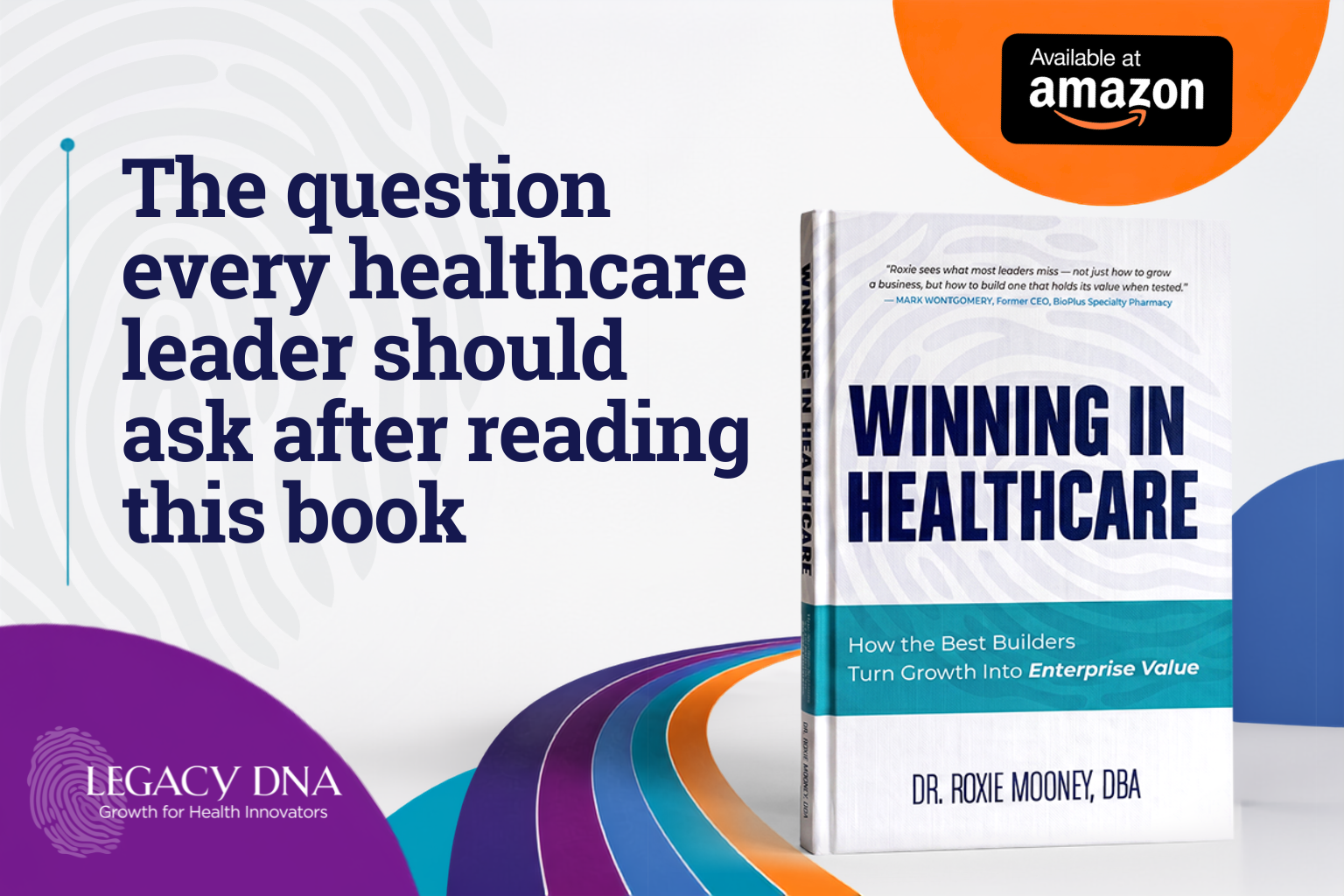
Winning in Healthcare closes with eleven stories and one uncomfortable question. Here is why it matters more than any growth metric on your dashboard.
The moment nobody schedules
Every company reaches a point where what got it here will not get it there. The founder's instinct, the hustle, the relationships, the willingness to hold everything together by sheer force of will. All of it works, until quietly it stops working. Revenue keeps climbing, so the dashboard still looks healthy. But underneath, the business is starting to strain against its own growth.
That moment does not announce itself. It does not appear on a board deck or a pipeline report. It arrives as friction, as things taking longer, as answers that only one person can give. And by the time it becomes obvious, the window to act on your own terms has usually narrowed.
Why growth hides the problem
Here is what makes this so difficult for strong operators. Growth is the perfect disguise. When the top line is moving, it is easy to assume the engine underneath is sound. You are winning deals, adding logos, raising rounds. Why look closer?
But growth and enterprise value are not the same thing, and buyers know the difference even when founders do not. A company can grow quickly and still be fragile. It can post impressive numbers and still depend entirely on a handful of people, a few relationships, and a story only the founder can tell. That fragility does not show up while things are going well. It shows up the moment someone with capital starts asking harder questions.
The question itself
So here is the question the book leaves you with. The question worth sitting with. It is not whether that inflection point will come, because it always does. It is whether you will recognize it in time to do something about it.
Most leaders miss it. Not because they are careless, but because they are busy carrying the weight, and the weight feels like progress. Recognizing the moment requires stepping back from the business long enough to see it clearly. To ask whether your growth is holding, or whether it is quietly beginning to break. The leaders who win are not the ones who avoid this moment. They are the ones who see it first.
What buyers actually see
Step into a buyer's seat for a moment, because that is the seat that ultimately prices your business. A buyer is not evaluating how hard your team works or how compelling your vision sounds. They are evaluating risk. Can they understand how the company creates value? Is that value repeatable without you? Does the performance live in systems, or in a few people's heads?
When the answers are clear, confidence rises and so does the multiple. When the answers route back to the founder, buyers discount, hesitate, or restructure the deal. Two companies with identical financials can command wildly different valuations for exactly this reason. Not because one grew faster, but because one was built to be understood, trusted, and owned by someone else.
Structure is the answer to the question
The good news is that the moment when what got you here will not get you there is not a verdict. It is an invitation. It is the point where growth needs to become intentional, where effort needs to become structure. Structure is what turns a great company into a buyable one. It is documented systems instead of heroics. Positioning clear enough that a buyer repeats it back to you. Revenue that runs on a repeatable engine rather than the founder's calendar. Proof that replaces assertion.
None of this dampens the vision that got you here. It protects it. It ensures that the value you have built can travel beyond you, hold under pressure, and stand up in the room where it matters most.
Recognize it before diligence does
The leaders featured in Winning in Healthcare did not wait for a transaction to force these questions on them. They built the answers in advance, quietly and intentionally, long before anyone opened a data room. That is the difference between shaping your outcome and reacting to it.
If any part of this landed a little too close to home, that is worth paying attention to. The moment is easier to navigate when you see it early, while you still hold the leverage. Growth alone does not create enterprise value. Structure does. And the best time to build that structure is before a buyer, a board, or the market decides to test it for you.
Your next step
If you saw your own company anywhere in this piece, you have already done the hardest part. You have recognized the moment. The next step is understanding where your growth is holding and where it is beginning to break, before diligence does that work for you.
Read the full set of stories. Winning in Healthcare: How the Best Builders Turn Growth Into Enterprise Value is available now on Amazon.\Then pressure test your own business. Schedule a Strategic Fit Call for an honest read on where your growth story stands and whether it will hold when it is tested. No pitch. No pressure. Just clarity. Book yours at legacy-dna.com/strategic-fit-call